The Manhattan-to-Mediterranean Migration
The Hamptons will get you a weekend. It will not get you anonymity. For a certain tier of American executive — the kind whose calendar is triple-booked and whose face is recognized in every boardroom from Midtown to Menlo Park — a beach house two hours from Manhattan no longer solves the actual problem: being left alone.
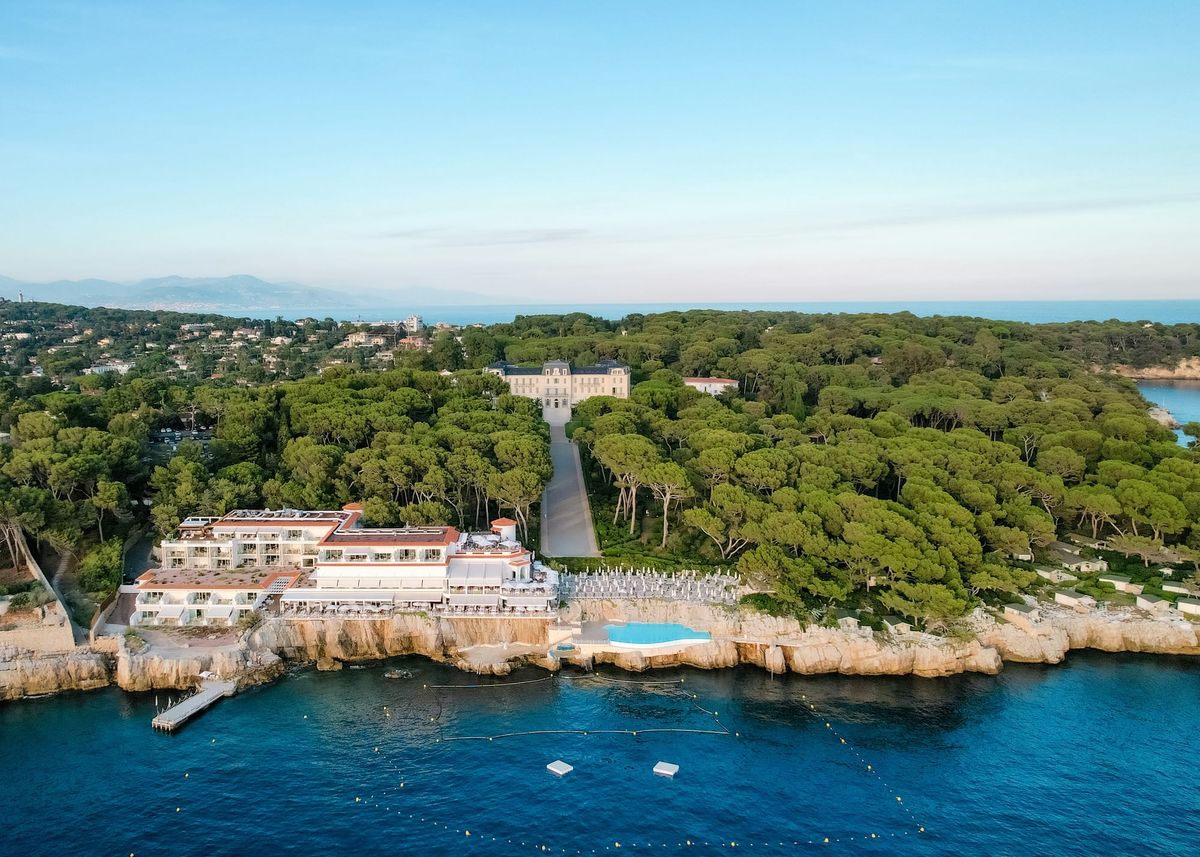
That's the calculation quietly reshaping where corporate leadership spends its downtime. Increasingly, the answer isn't Long Island. It's a two-mile stretch of pine-covered coastline on the French Riviera called Cap d'Antibes.
The distinction matters. Saint-Tropez trades on visibility — yacht-lined harbors, paparazzi lenses, a nightlife economy built on being seen. Cap d'Antibes was built on the opposite instinct. Its estates sit behind stone walls and cypress hedges, its roads are narrow and unmarked, and its oldest properties have sheltered the genuinely famous — from Cole Porter's era to today's tech founders and hedge fund principals — precisely because discretion here isn't a marketing angle. It's zoning, geography, and a century of local habit.
This is an inside look at why Wall Street and C-suite executives are increasingly treating this specific peninsula as their preferred remote-work base and family retreat — and what the real estate landscape actually looks like for an American buyer entering the market today.
The Anatomy of Privacy: Why the "Cap" Is Incomparable
Geographic isolation, by design
Cap d'Antibes is a peninsula, not a neighborhood — a bulge of land jutting into the Mediterranean between Antibes and Juan-les-Pins, ringed almost entirely by coastline. That shape does something no security system can replicate: it eliminates through-traffic. There's no reason to drive onto the Cap unless you're going to a specific address on it. Compare that to a Hamptons lane or a Malibu bluff, both of which sit on routes people use to get somewhere else. On the Cap, every car is either a resident, a guest, or conspicuously lost.
An architecture built to disappear
Walk — or more likely, fail to walk past — a Cap d'Antibes estate, and what you'll notice is what you can't see. Properties here favor high stone perimeter walls, dense Mediterranean canopy (umbrella pines, ancient olive trees, towering cypress), and gates set back from any sightline. Local zoning and preservation rules add another layer: strict limits on building height, footprint, and density have kept the peninsula from the kind of over-development that's turned other coastal enclaves into rows of visible, comparable trophy homes. Fewer buildable parcels means less redevelopment pressure, and less redevelopment pressure means the privacy infrastructure — the walls, the mature trees, the winding private lanes — has had decades, sometimes a century, to mature undisturbed.
Security that runs deeper than a gate code
The privacy is also social. Cap d'Antibes hosts a tight, long-tenured community of full-time residents, seasonal families, and discreet staff who have worked the peninsula's properties for years. That ecosystem — gardeners, caretakers, local agents — functions as an informal layer of security on top of the formal one: gated domains, monitored perimeters, and increasingly sophisticated smart-home systems that let an owner in New York check on a Cap property in real time. It's the kind of quiet, integrated security that money alone doesn't buy overnight; it's built through relationships and reputation, the same currency that matters in the boardroom.
The Real Estate Landscape: What NYC Executives Are Buying
Belle Époque grandeur vs. modern minimalism
Two architectural worlds coexist on the Cap. One is the Belle Époque estate — stone facades, wrought-iron balconies, formal gardens, and a provenance that often includes a notable prior owner or a documented place in Riviera history. These properties are bought as much for their story as their square footage.
The other is the new generation of ultra-modern, low-energy compounds: clean-lined villas retrofitted or built to BBC (Bâtiment Basse Consommation) low-energy-consumption standards, pairing efficient building envelopes and geothermal or solar systems with the same privacy fundamentals — walls, gates, mature planting — that define the older estates. For American buyers weighing operating costs and environmental credentials alongside prestige, this segment has become the fastest-growing part of the market.
What today's American buyers actually require
A few features now show up on nearly every serious buyer's checklist:
A soundproofed executive home office wired for high-speed satellite and fiber connectivity — non-negotiable for anyone running a New York calendar from a French time zone. Infinity pools positioned to frame the view toward the Lérins Islands and the Esterel massif, rather than simply toward open water. Private sea access, whether a path down to a rocky cove or a dedicated mooring. And underground parking built for a real collection — three, four, sometimes more vehicles — rather than a single driveway.
The value case
Cap d'Antibes real estate is anchored less by comparable sales than by scarcity. Villas start around €5 million for well-located properties, with the core market running €4 million to €8 million and trophy, water-facing estates regularly clearing €10 million to €20 million or more. Because the peninsula is functionally built out — protected coastline, height restrictions, and almost no available land for new construction — supply cannot expand to meet demand the way it can in a typical luxury suburb. That scarcity has historically underpinned steady capital appreciation, and it feeds a robust high-end vacation rental market that lets an owner recoup carrying costs during the months an executive is back at a desk in New York.
Market Reality Check
| Feature | Cap d'Antibes Properties | Typical Ultra-Luxury Suburbs |
|---|---|---|
| Primary architectural style | Belle Époque estates & secured modern compounds | Contemporary, often repeatable "cookie-cutter" designs |
| Average privacy rating | Ultra-high — stone walls, dense foliage, no through-traffic | Medium — open lots, visible from the road |
| Key scenic view | Dual coastlines, Lérins Islands, and the distant Alps | A single water view or golf-course frontage |
| Top work-from-home amenity | Soundproofed home bastides with high-speed connectivity | Standard study or den layout |
The Executive Lifestyle: 48 Hours on Cap d'Antibes
Day 1: The sanctuary and the coast
Morning — Start with the Sentier du Littoral, the coastal footpath locally known as the Tire-Poil trail, which traces the peninsula's rocky southern edge. It's the rare stretch of the Cap that's genuinely public, and it delivers uninterrupted Mediterranean views without a single rooftop in frame.
Afternoon — Retreat to a private cabana at the legendary Hotel du Cap-Eden-Roc, the peninsula's defining address since the 1870s and still the benchmark for old-world Riviera privacy — a place where the staff has spent generations learning exactly how much attention a guest wants, and providing precisely that.
Day 2: Gastronomy and culture
Lunch — At Les Pêcheurs, the Michelin-starred restaurant at the Cap d'Antibes Beach Hotel, where chef Nicolas Rondelli builds a contemporary, Mediterranean-forward menu around the day's catch — much of it sourced from a local fisherman working out of a port just steps from the dining room — served on a terrace facing the Lérins Islands and the Esterel foothills.
Evening — Dinner at Le Michelangelo, tucked behind the ramparts of Vieil Antibes. Running since the early 1990s, this Italian address in an old stone cellar has quietly become a fixture for visiting film, music, and business figures — the kind of place where recognition happens, but nobody reaches for their phone.
Logistics & Purchasing Power: Making the Leap
The American angle on currency
Exchange rates move, and any buyer should treat the euro-dollar rate as a variable to plan around rather than a reason to rush. With EUR/USD trading in the mid-1.10s through mid-2026, the dollar isn't at its strongest historical level against the euro — which makes timing, financing structure, and hedging conversations with a currency specialist more relevant than ever, not less. The value case for Cap d'Antibes rests on scarcity and long-term appreciation, not on a temporary currency window.
Legal and concierge support
French real estate law is not American real estate law, and treating it as a variation on a familiar theme is the most common — and most expensive — mistake foreign buyers make. A premium sole-agency agreement ensures a single, accountable point of contact managing the transaction rather than a fragmented, multi-agent process common in this market. Equally essential is a cross-border tax specialist who understands both French property and inheritance rules (notably France's forced heirship provisions) and the U.S. tax exposure of owning foreign real estate — an area where the right upfront structuring (SCI ownership, usufruct planning, or trust structures) can materially affect both tax efficiency and succession outcomes.
Conclusion: The Ultimate Corporate ROI
Cap d'Antibes isn't a status purchase. It's infrastructure — for the kind of life a corporate executive is actually trying to build: real privacy instead of the appearance of it, a scarce asset class with a genuine appreciation history, and a physical distance from New York that somehow makes the return to it easier. For the buyer who has already achieved everything visible, the Cap offers the one thing that's harder to acquire: the ability to be, briefly, unavailable.